


Sign 8
Evergreen Tour Starts Here!
Pine, Red
Pinus resinosa
- Interest:
- Evergreen
- Family:
- Pine (Pinaceae)
- Form:
- Coniferous Evergreen
Tree
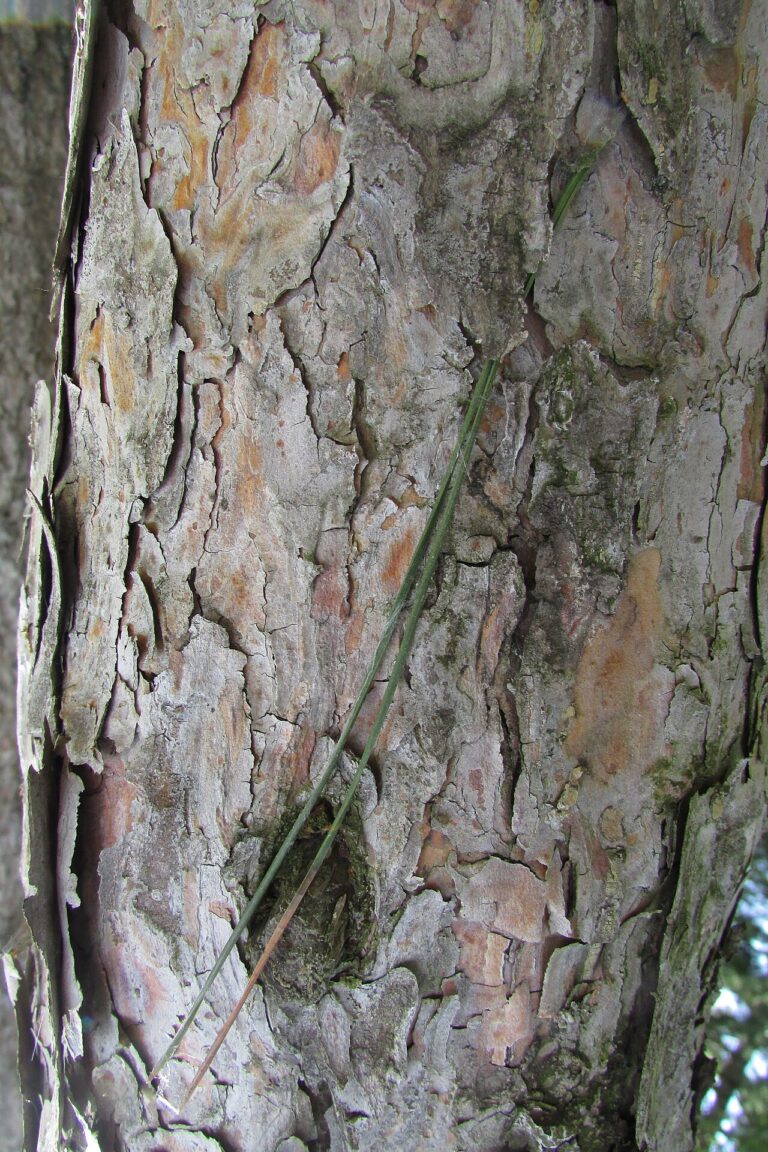
Description: Red Pines are coniferous evergreen trees that attract birds. Growing 60-80 feet tall, they can reach up to 100 feet or more in ideal conditions, with straight trunks 30-40 inches in diameter. They feature a rounded crown and reddish, flaky bark with long needles in pairs, forming a stately, tall tree.
Red Pine has sheltered & supplied people for generations: its straight trunks built cabins, utility poles, & ship masts. Pine needles were brewed into vitamin-rich teas, & pitch sealed canoes and wounds alike. Its wood still warms homes and its boughs weave into baskets & seasonal crafts.
Photo: Chris Light, CC BY-SA 4.0, via Wikimedia Commons

More plant info
What to look for
Red pine needles come in bundles of two and are long, straight and brittle; they snap cleanly when bent. The bark explains the name: thick gray-brown plates at the base, and thin, flaky, orange-red bark higher up the trunk.
Where it comes from
Red pine is native from Newfoundland west to Manitoba and south to Pennsylvania, with small outlying stands in the Appalachians. It is a sun-loving pioneer tree that can live about 500 years. In Minnesota, where it is the state tree, it is often called Norway pine.
People and red pine
Its straight trunks have been used for pilings, masts and building timber. The tree makes large amounts of resin to seal wounds, and that resin is refined into rosin and turpentine. The species name resinosa means full of resin.
Sources
Guided tours of the arboretum are free, by appointment. Text Mary at 978-887-4202.