


Sign 15
Maple, Silver
Acer saccharinum
- Bloom Time:
- Feb–March
- Family:
- Soapberry (Sapindaceae)
- Form:
- Tree, Deciduous
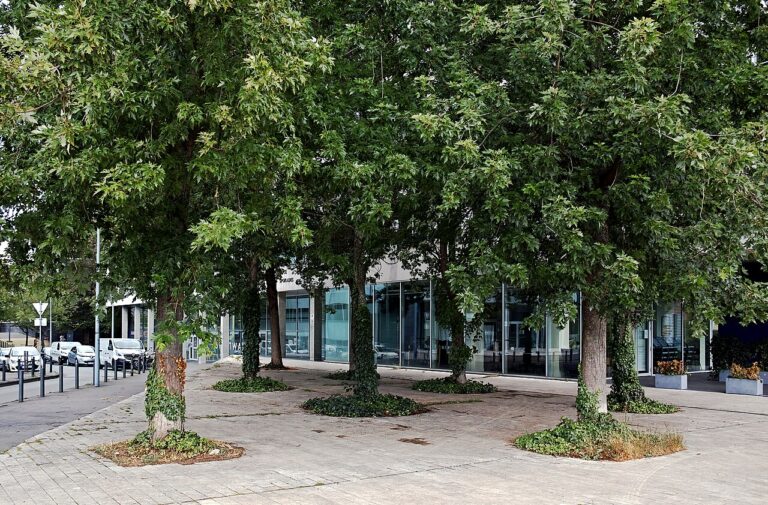
Tree
Description: The Silver Maple is one of the first trees to bloom, in late winter or early spring. Its small flower clusters attract bees and birds, as well as squirrels who like to eat them. It’s a fast-growing deciduous tree reaching approximately 50-80’ tall x 35-50’ wide.
Silver Maple’s fast-growing wood has been turned into furniture, flooring, baskets, and tool handles for generations. Its sap can be boiled into syrup, and Native Americans ground its winged seeds into flour. Planted widely for quick shade, it cooled farmhouses and city streets alike.
Photo: Velvet, CC BY-SA 4.0, via Wikimedia Commons

More plant info
What to look for
Turn over a leaf: the underside is silvery white, and on a windy day the whole tree flashes silver. The leaves are deeply cut into five lobes. Silver maple is one of the first trees to flower, often in February or March, with small red-and-yellow tufts on bare twigs.
Food for wildlife
In early spring, when last year’s nuts have run out, silver maple’s large round buds are one of the main foods for squirrels. Its winged seeds feed chipmunks and birds, and deer and beavers eat the bark.
Where it comes from
Silver maple is native to the eastern and central United States and southeastern Canada and is one of the most common trees in the country. It grows naturally along rivers and wetlands, which is why it is also called water maple or swamp maple.
Sources
Guided tours of the arboretum are free, by appointment. Text Mary at 978-887-4202.