


Accessible Gardens
Half a mile of wheelchair-accessible trails past our roses, lilacs and the Lily Pond Overlook.
Accredited Arboretum

American Horticultural Society

Why We Built Accessible Gardens
On Mother’s Day 2008, I took my mother, Margaret, to the botanical garden closest to her care facility, hoping we could smell some roses. They had none. The small garden they sent us to instead was hard to get into with her wheelchair. Margaret died that December. Karl and I built our first wheelchair-accessible trail in her memory in 2011, and we have been planting along it ever since, so the flowers come to the edge of the path.
- Paths: Firm, level brick and crushed-stone paths for wheelchairs, walkers and power chairs.
- Raised beds: Flowers at a height you can touch and smell from a wheelchair.
- Benches: Places to stop and sit along the way.
What the Research Says
Studies of time spent in gardens and nature report that it can:
- Reduce anxiety and caregiver burnout
- Lower heart rate and blood pressure
- Improve attention
Explore the Ranch: Garden Map
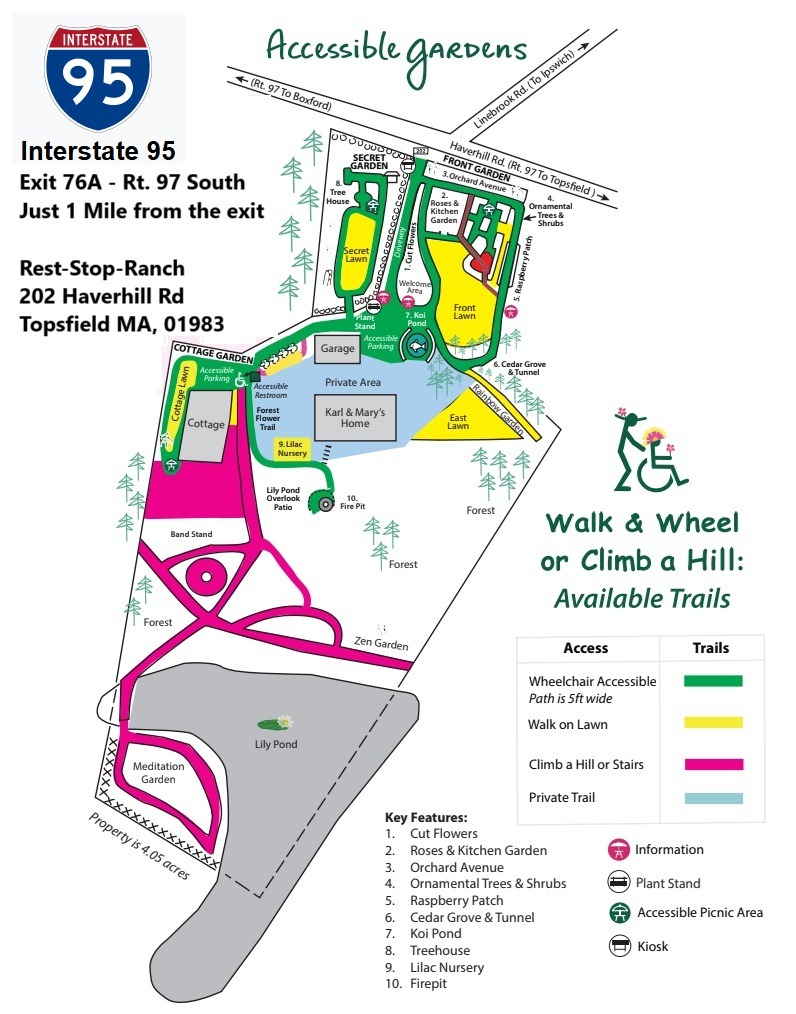
The map shows the accessible routes and each garden area.
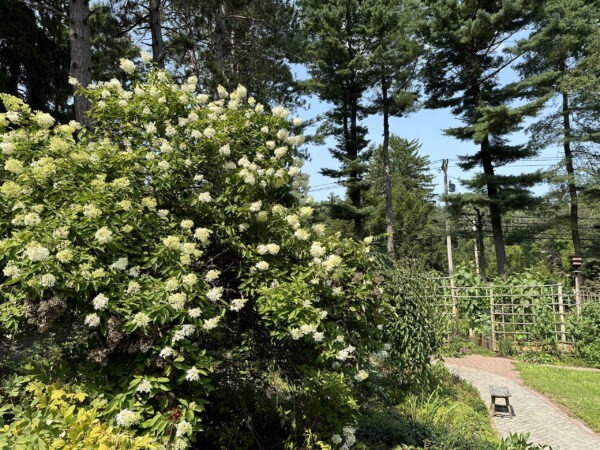
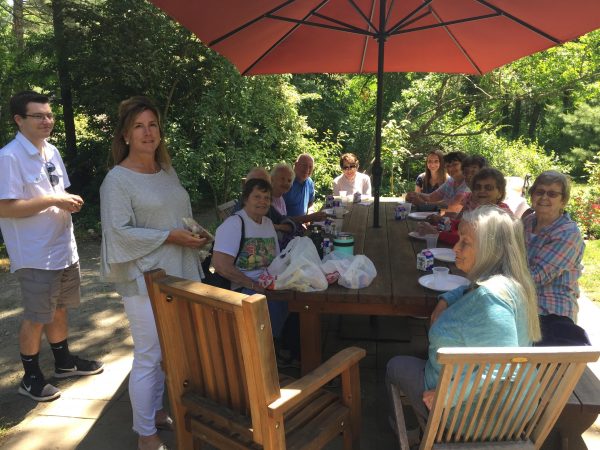
Our Collections and the People Who Help
The gardens are a Level I accredited arboretum through ArbNet. Our lilacs grow with help from the International Lilac Society, which gave us its Award of Merit in 2025; with its Preservation Committee, we grow rare lilac varieties so they are not lost. Volunteers from the Essex County Master Gardeners help us care for the beds, and the New England Rose Society has helped with our roses since 2017.
April to July: What Is Blooming
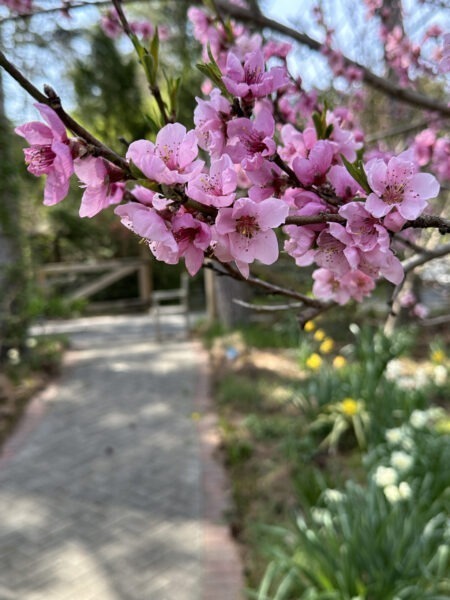
The Bulb Parade opens the season in April. More than 70 lilac varieties bloom in May. In June, over 100 rose varieties bloom for our June Rodeo, and the Asian and Oriental lilies follow in July.
Therapeutic Horticulture
On Tuesday and Thursday afternoons from April to November, Garden Rx open hours give care-partners and the people they care for time to walk, sit and look around at their own pace.
Master Gardener Support
Certified volunteers from the Essex County Master Gardeners work in the gardens alongside Karl and me. A lot of what you see blooming is their work too.