


Sign 23
Witch Hazel ‘Diane’
Hamamelis ×
intermedia ‘Diane’
- Bloom Time:
- Jan–March
- Family:
- Witch Hazel (Hamamelidaceae)
- Form:
- Shrub, Deciduous
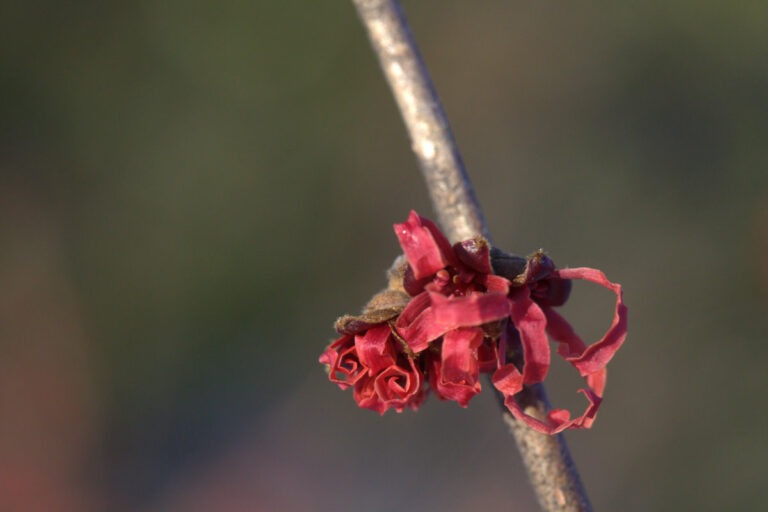
Shrub
Description: Witch Hazel ‘Diane’ is noted for its winter bloom: mildly fragrant, copper-red flowers on bare branches, followed by broad oval leaves that turn orange-red in fall. It’s a deciduous shrub approximately 12-20’ tall x 10-15’ wide.
Witch Hazel is one of America’s oldest herbal remedies. Native Americans taught colonists to distill the bark of our native witch hazel, a cousin of ‘Diane’, into a soothing astringent still sold today, while its forked branches served as divining rods for finding water. Its winter blooms have long symbolized hope.
Photo: Averater, CC BY-SA 3.0, via Wikimedia Commons

More plant info
What to look for
Come in January, February or March. ‘Diane’ flowers on bare branches in the middle of winter: each flower is a cluster of thin, crinkled, copper-red petals. On cold days the petals curl up and then unfurl again when it warms. In fall the leaves turn orange, red and purple.
The story behind it
Hybrid witch hazel is a cross between a Japanese and a Chinese witch hazel. ‘Diane’ was named in 1969 by Robert and Jelena de Belder at the Kalmthout Arboretum in Belgium, after their daughter, and it is still one of the best red witch hazels. Plants are often grafted onto roots of our native witch hazel.
Its native cousin
The witch hazel sold at drugstores is distilled from our native witch hazel, a separate species that flowers yellow in late fall.
Sources
Guided tours of the arboretum are free, by appointment. Text Mary at 978-887-4202.