


Sign 19
Arborvitae
Thuja occidentalis
- Interest:
- Evergreen
- Family:
- Cypress (Cupressaceae)
- Form:
- Tree, Conifer
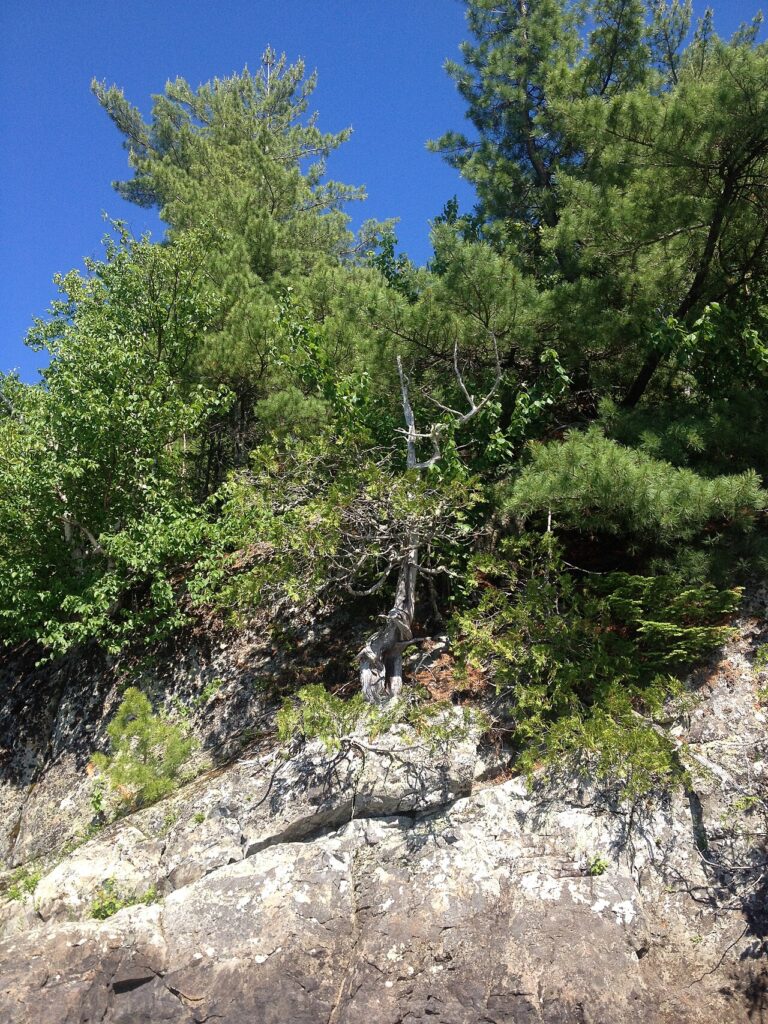
Tree
Description: The Arborvitae is an evergreen conifer that provides year-round interest and shelter for birds. This fast-growing conifer reaches approximately 40-60’ tall in the wild; garden varieties are often smaller.
Arborvitae, or “tree of life,” earned its name when its vitamin C-rich needles helped save French explorers from scurvy. Native Americans used its wood for canoes and its bark for baskets, while its fragrant boughs remain valued today.
Photo: Campitibi, CC BY-SA 4.0, via Wikimedia Commons

More plant info
What to look for
Arborvitae’s leaves are tiny overlapping scales in flat sprays. Crush a spray and it smells sweet and resinous. The cones are small, about half an inch long. The bark is reddish-brown and peels in long strips.
Where it comes from
Our arborvitae is a native tree, also called northern white cedar. It grows wild in eastern Canada and the north-central and northeastern United States, especially in cedar swamps and on cliffs where other trees cannot compete.
People and arborvitae
Its rot-resistant wood has been used for fence posts, shingles and log cabins, and it is the preferred wood for the ribs and planking of birchbark canoes. Gardeners have bred more than 300 cultivars, many of them used as hedges and screens.
Sources
Guided tours of the arboretum are free, by appointment. Text Mary at 978-887-4202.