


Sign 18
American Elm ‘Valley Forge’
Ulmus americana
‘Valley Forge’
- Bloom Time:
- Early Spring
- Family:
- Elm (Ulmaceae)
- Form:
- Tree, Deciduous
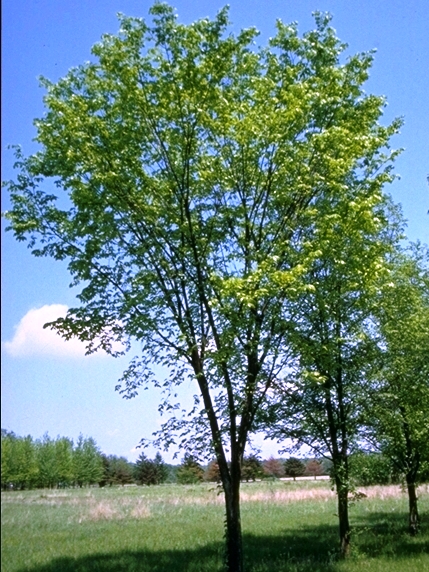
Tree
Description: The American Elm tree blooms in early spring. Its small greenish flowers are pollinated by the wind, and birds and squirrels eat its seeds. It’s a deciduous tree approximately 60-80’ tall x 40-70’ wide.
The American Elm once shaded Main Streets across the country, earning its place as America’s most beloved shade tree. Native Americans used its fibrous bark for rope, baskets, and canoes, while ‘Valley Forge’ helps restore the species with improved disease resistance.
Photo: U.S. National Arboretum (USDA), Public domain, via Wikimedia Commons

More plant info
What to look for
American elm grows into a tall vase shape with arching branches. The leaves are lopsided at the base and doubly toothed along the edges. In early spring, before the leaves, small flowers hang from the branches and are pollinated by the wind.
Massachusetts’ state tree
American elm is the state tree of Massachusetts. It once lined Main Streets across the country until Dutch elm disease, spread by bark beetles, killed most of them starting in the 1920s. ‘Valley Forge’ was raised by the U.S. Department of Agriculture in Maryland and released by the U.S. National Arboretum in 1995. It has proved the most resistant to Dutch elm disease of the American elm cultivars, though not immune. It is named for Valley Forge, where Washington’s army spent the winter of 1777.
Food for wildlife
Elm leaves feed the caterpillars of the mourning cloak, question mark and eastern comma butterflies, among others.
Sources
Guided tours of the arboretum are free, by appointment. Text Mary at 978-887-4202.