


Sign 6
Lilac Tour Starts Here!
Lilac ‘Maiden’s Blush’
Syringa ×
hyacinthiflora
- Bloom Time:
- Early May
- Family:
- Olive (Oleaceae)
- Form:
- Shrub, Deciduous
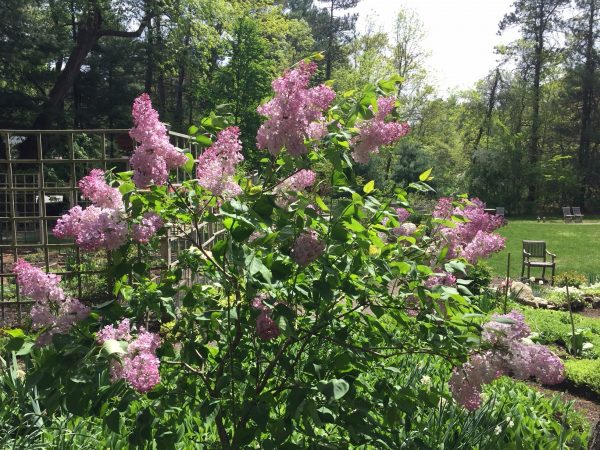
Shrub
Description: The Lilac ‘Maiden’s Blush’ blooms early May. Sweetly fragrant flowers attract bees, birds, and butterflies. It’s a deciduous shrub approximately 10’ tall x 10’ wide.
Lilacs arrived with early colonists and were planted by farmhouse doors for their beloved May fragrance, a tradition still seen across New England. Edible blossoms flavor honeys, sugars, and spring desserts, while lilac oil and water have scented soaps and cosmetics for centuries.
Photo: Rest-Stop-Ranch
More plant info
What to look for
‘Maiden’s Blush’ opens single, light pink flowers in early May, before most common lilacs. The flowers are very fragrant. It starts blooming while it is still young and grows into a shrub about 6 to 8 feet tall.
The story behind it
Early-flowering lilacs began in France in 1876, when Victor Lemoine crossed the common lilac with an Asian species and noticed the flowers looked like hyacinths, hence the name hyacinthiflora. Frank Skinner, a self-taught breeder in Dropmore, Manitoba, used the Korean form of that Asian lilac to breed lilacs for harsh prairie winters. ‘Maiden’s Blush’, introduced in 1966, was his last lilac and is often called his best pink.
Growing it at home
Lilacs bloom on buds formed the summer before. If it needs shaping, prune right after the flowers fade, taking off the spent clusters without cutting into next year’s buds. Full sun and good air flow give the most flowers.
Sources
Guided tours of the arboretum are free, by appointment. Text Mary at 978-887-4202.