


Sign 4
Hydrangea ‘Pee Gee’
Hydrangea
paniculata
‘Grandiflora’
- Bloom Time:
- July–October
- Family:
- Hydrangea (Hydrangeaceae)
- Form:
- Shrub, Deciduous
Shrub
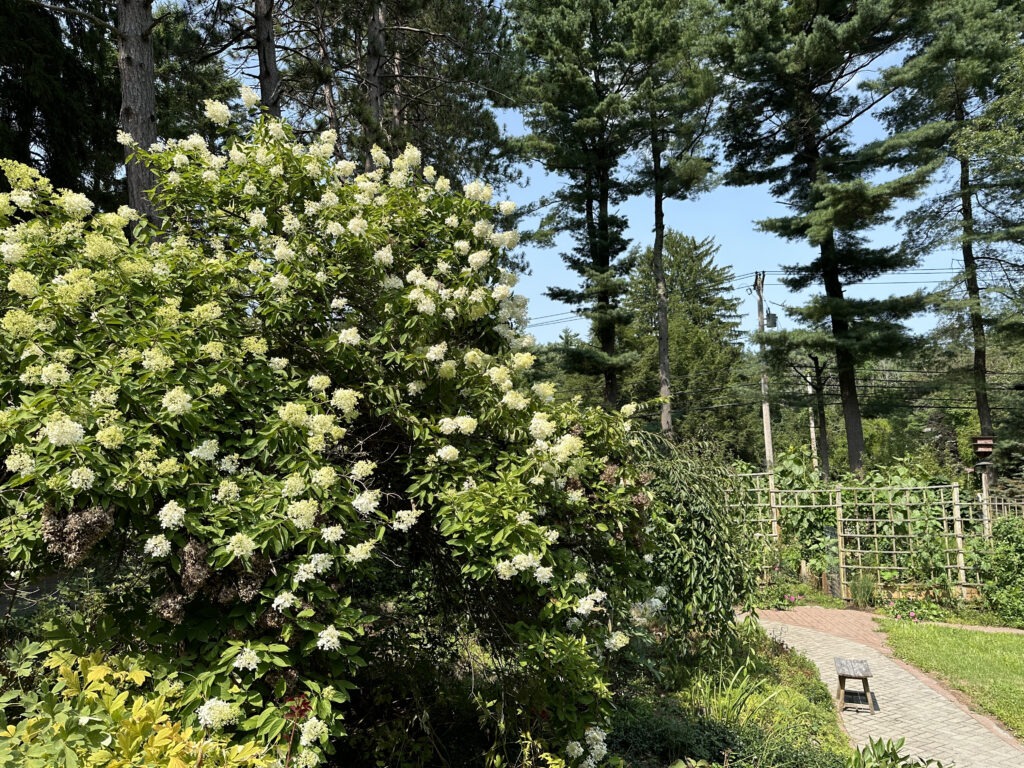
Description: The Pee Gee Hydrangea blooms July to October. Its large conical flower clusters attract birds, butterflies and hummingbirds. It’s a deciduous shrub, often trained as a tree, that can grow to approximately 25’ tall x 15’ wide.
Hydrangeas have been cultivated in Japan for centuries, where sweet tea from a related species is served at Buddhist ceremonies. The roots of a native American hydrangea appeared in early folk medicine for urinary ailments. Today, dried flower heads are prized for wreaths and everlasting arrangements.
Photo: Rest-Stop-Ranch
More plant info
What to look for
Pee Gee’s large cone-shaped flower clusters open creamy white in midsummer and slowly blush pink as the weather cools. The dried heads hold on the shrub into winter, which is why they are prized for wreaths and dried arrangements.
Where it comes from
Panicled hydrangea is native to China, Korea, Japan and Sakhalin Island in Russia. It was first described for Western science by Philipp Franz von Siebold in 1829. ‘Grandiflora’, nicknamed Pee Gee from its initials, is the classic old form with oversized flower heads.
Growing it at home
This hydrangea blooms on the current year’s growth, so it can be pruned in late winter or early spring without losing flowers. Pruning in spring also gives larger flower heads. It is one of the most cold-hardy hydrangeas.
Good to know
Hydrangea leaves and buds contain compounds that release cyanide, so no part of the plant should be eaten or smoked.
Sources
Guided tours of the arboretum are free, by appointment. Text Mary at 978-887-4202.